
Co-authored by humanworks8 and St. Francis Children’s Center
Nonprofit organizations are values‑driven by nature. Most have thoughtfully articulated core values and invested significant time in strategic planning. Yet even with the best intentions, many leaders still ask the same question: How do we translate what we believe into how people actually work, decide, and grow every day?
At St. Francis Children’s Center (SFCC), that question became a catalyst for transformation. Together with humanworks8, SFCC set out to not only author relevant core values aligned with who they truly are, but to intentionally connect core values to People Touchpoints including strategic planning and performance evaluation, not as separate initiatives, but as one integrated system designed to strengthen clarity, accountability and culture.
When Values Sit on the Wall and Plans Sit on the Shelf
Many nonprofits experience familiar challenges:
- Core values that don’t always guide decisions
- Strategic plans that feel disconnected from daily work
- Performance conversations that focus more on effort than outcomes
- Unclear expectations and uneven accountability
After significant changes in leadership in recent years, SFCC began a journey of elevating these practices in a way that not only champions people and strengthens organizational outcomes, but sets the organization apart. Executive Director Laura Felix reflected on that realization, “We knew that our values mattered, but we weren’t consistently using them to anchor decisions, communication and team accountability across the organization.”
Rather than addressing these gaps in isolation, SFCC chose to approach them together, recognizing that people, strategy and performance are deeply interconnected.
Core Values as a Strategic Anchor
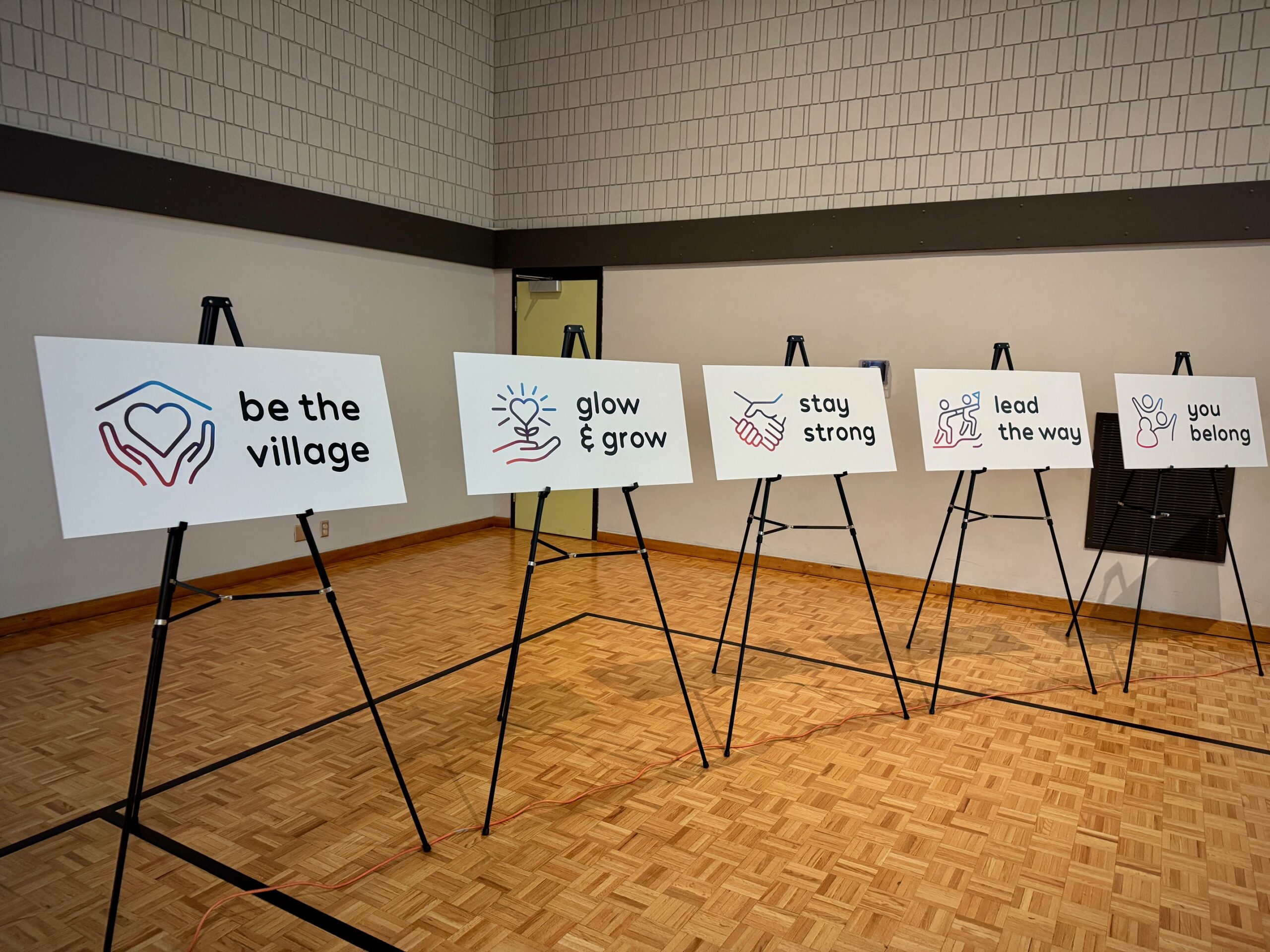
SFCC began by revisiting its core values, not just to rewrite them, but to clarify what they look like in action. Team members across the organization engaged in the humanworks8 Values Discovery process to articulate what it really means to be St. Francis Children’s Center. Team member input ultimately led to gutsy, unique and active core values that team members could see themselves in and reflect in their daily interactions and responsibilities.

This shift created something powerful: consistency.
When values are described in action, they become usable for evaluation, recognition, redirection, and leadership modeling.
Creating a Living Strategic Plan
After defining this common language around core values, SFCC had the answer to the first of 12 questions that serve as the foundation for The Way, humanworks8’s strategic planning framework. Through Board and leadership team input, SFCC created and adopted this living strategic planning framework, which was intentionally designed to guide priorities and actions throughout the year. Core values became the foundation on which this action was built.
SFCC moved from a static long-term plan created by the Board of Directors to an operating framework that lives in shorter, quarterly cycles and requires frequent evaluation and communication of progress. Through this process, the SFCC leadership team communicated an aligned vision for the organization, priorities for the year ahead and the metrics they would be tracking to show progress and maintain accountability.
SFCC leaders revisit progress toward annual goals, along with quarterly priorities, every 90 days, and are currently focused on embedding strategy into weekly meeting rhythms.
From Strategy to Performance
With values clarified and strategy alive, one question naturally followed: How does each team member contribute to the goals outlined in the strategic plan?
To answer that, SFCC redesigned its approach to performance evaluation, shifting from broad conversations to a performance‑based evaluation strategy rooted in values and outcomes.
Highlights of the transition included:
- Expectations tied directly to values and strategic priorities
- Introducing objective measures alongside development conversations
- Leaders building self‑awareness and shared language around problem‑solving
- Inviting accountability and ownership from team members
- Providing meaningful feedback that improves trust and performance over time
Perhaps most importantly, the nature of performance conversations at SFCC is less subjective and more developmental.
What Other Nonprofits Can Learn
SFCC’s journey offers several principles that can translate across organizations regardless of size or mission:
- Treat values, strategy and performance as one integrated system
- Define expectations clearly before evaluating outcomes
- Start with leadership, but design for the whole organization
- Keep tools practical and adaptable
- Expect and encourage questions
Culture change and performance improvement doesn’t happen overnight. It’s iterative and requires courage and discipline. SFCC strives to create a culture where team members understand how their work matters and what success truly looks like, and these changes are foundational to doing just that.
Looking Ahead
SFCC leaders continues to evolve through learning, refining and growing alongside the team.
“If our organization fully aligns values, strategy, and performance, what we make possible for staff – and the children and families we serve – changes fundamentally,” says Laura Felix.
At humanworks8, we believe the strongest organizations don’t separate what they believe from how they operate. SFCC’s story is proof that when those elements rise together, people and collective missions do too.